A Whole-Person Reset for the New Year: Using the Wheelhouse to Support Trauma Healing

At the beginning of a new year, we often come across a lot of messages urging us to change, to feel better, to do things differently, or to finally “move on” from what’s been weighing us down.
For people living with the effects of trauma, the pressure to change can feel especially heavy. Trauma doesn’t follow timelines, and it doesn’t reset simply because the calendar turns. Rather than a dramatic transformation, what many people actually long for is a deeper sense of safety, steadiness, and connection within themselves.
At Whole Life Healing, trauma therapy is grounded in the belief that healing happens when the whole person is supported. This work is collaborative, trauma-informed, and structured to honor your nervous system rather than push it.
This blog focuses on The Wheelhouse, a somatic framework within the whole-person approach that helps clients understand how trauma affects different areas of life and where support is most needed.
Trauma Affects More Than Thoughts
Trauma is often viewed as something that lives in memories or emotions, but its impact reaches far beyond the mind. Trauma can shape how safe you feel in your body, how you relate to others, how you interpret the world, and how connected you feel to meaning or purpose.
Rather than viewing symptoms in isolation, Whole Life Healing takes a view of the person as a whole. Trauma may show up across multiple areas of life at once, including:
Mental patterns and self-talk
Physical sensations and nervous system responses
Emotional regulation and expression
Relational boundaries and attachment
Spiritual connection, values, or sense of direction
These responses are often intelligent adaptations developed in response to overwhelming experiences. Trauma-informed therapy focuses on understanding these patterns with care, curiosity, and respect.
The Wheelhouse: A Framework for Whole-Person Trauma Healing
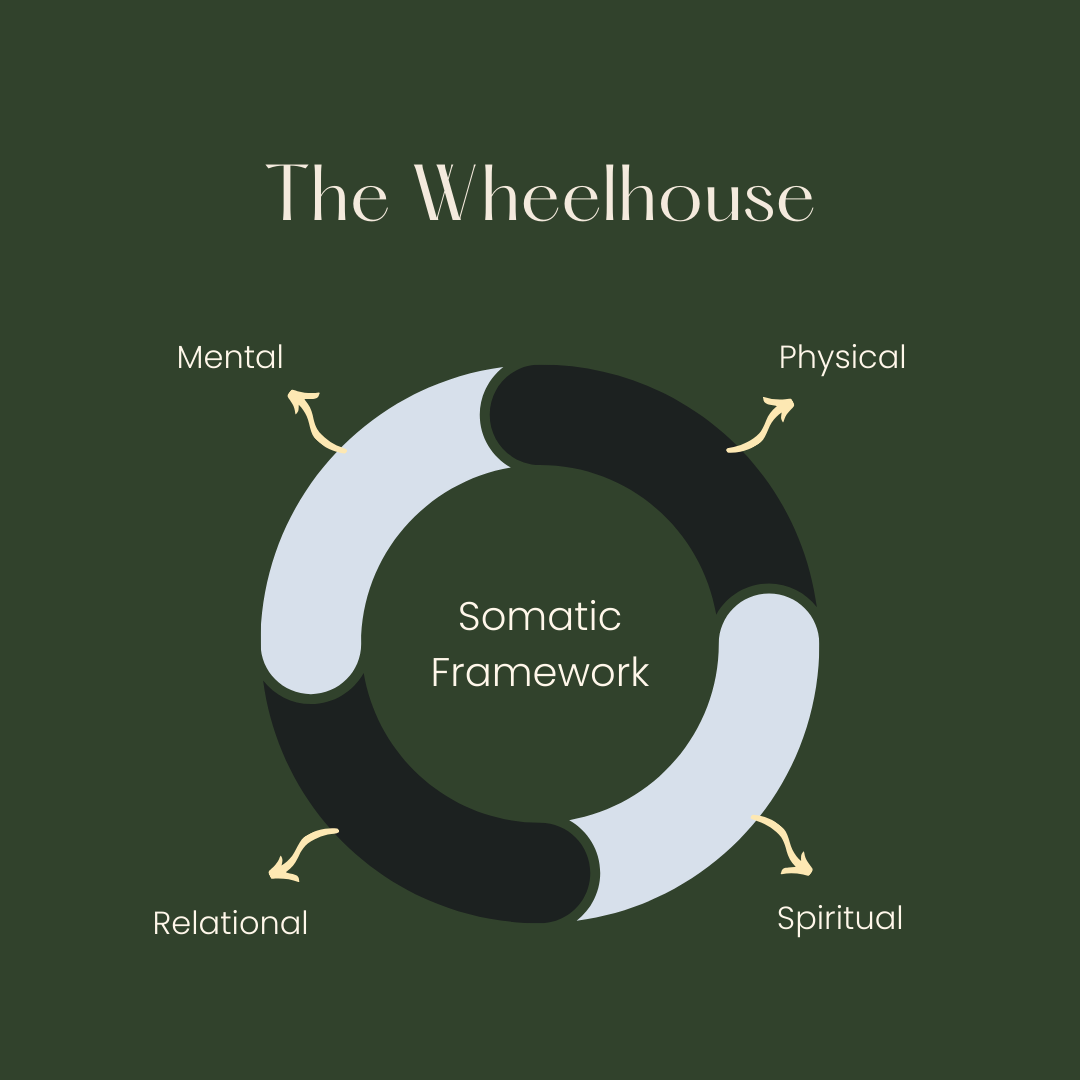
The Wheelhouse is a somatic framework used at Whole Life Healing to bring clarity to the trauma healing process. Rather than labeling or pathologizing, it offers a way to gently map where trauma may be impacting your life and how different areas are interconnected.
Instead of asking, “What’s wrong with me?” the Wheelhouse invites a more supportive question such as: Where is my system asking for care right now?
When it comes to healing trauma, it rarely happens in just one area. The Wheelhouse recognizes that mental, physical, emotional, relational, and spiritual experiences influence one another, and that supporting one area often supports the whole.
Mental: Trauma, Thought Patterns, and Self-Criticism
Trauma often affects how we think about ourselves and the world. You may notice persistent self-doubt, harsh inner criticism, difficulty trusting your own judgment, or a tendency to expect the worst.
These mental patterns are not personal flaws. They actually often develop as protective strategies during times when staying alert or self-critical felt necessary for survival.
In the mental space of the Wheelhouse, therapy focuses on increasing awareness of these patterns and creating space for more grounded, compassionate thinking. Counseling and EMDR therapy can help clients process experiences that shaped these beliefs, without forcing re-experiencing or emotional overwhelm.
Over time, many clients using The Wheelhouse find that intrusive thoughts feel less frequent and more flexible, allowing for greater clarity and self-trust.
Physical: How Trauma Lives in the Body
The body often carries trauma long after the mind understands what happened. Chronic tension, fatigue, disrupted sleep, headaches, digestive issues, or a constant sense of being “on edge” are common signs of nervous system dysregulation.
Within the physical part of the Wheelhouse, healing focuses on restoring a sense of safety in the body. Trauma-sensitive mindfulness, grounding practices, breathwork, and somatic awareness help clients learn how to notice physical cues and respond with care.
This work is gentle and intentional. Rather than forcing relaxation, it allows the nervous system to experience moments of regulation and ease at a pace that feels safe.
Emotional: Overwhelm, Numbness, and Emotional Regulation
Trauma can affect emotional experience in different ways. Some people feel emotions intensely and quickly, while others feel disconnected or numb. Many people alternate between the two.
Emotional overwhelm, emotional shutdown, or delayed emotional responses are common trauma responses. They reflect the nervous system’s attempt to manage what once felt too much.
In the emotional space of the Wheelhouse, therapy supports clients in gradually increasing their capacity to notice, name, and tolerate emotions without becoming flooded by them. Creativity, body-based awareness, and paced exploration allow emotions to be processed without the pressure to perform or explain them perfectly.
Relational: Trauma, Boundaries, and Connection
Trauma often impacts how we relate to others. Difficulty trusting, people-pleasing, fear of conflict, attachment wounds, or challenges with boundaries are common relational patterns shaped by past experiences.
The relational part of the Wheelhouse focuses on understanding how these patterns developed and how they continue to protect the nervous system. Therapy provides a safe space to explore connection, communication, and boundaries, both within the therapeutic relationship and beyond it.
Relational healing is about forcing vulnerability or emotions. It happens gradually, as safety, clarity, and self-trust grow.
Spiritual: Reconnecting With Meaning and Inner Alignment
Trauma can disrupt a person’s sense of meaning, purpose, or connection to themselves. You may feel disconnected from values that once guided you, unsure of direction, or distant from your intuition.
In the Wheelhouse, the spiritual dimension is not about religion unless that is meaningful to you. It is about inner alignment, values, belonging, and what feels grounding and life-giving.
Healing in this space often unfolds quietly, through reflection, reconnection, and a renewed sense of inner steadiness.
How EMDR, Counseling, and Mindfulness Work Together

At Whole Life Healing, EMDR therapy, counseling, and trauma-sensitive mindfulness are integrated within the Wheelhouse framework. These approaches support different areas of healing while remaining flexible and client-centered.
Clients play an active role in identifying where support feels most needed, with therapy remaining collaborative, adaptive, and responsive as needs shift over time. This integrative approach supports the whole person: not only symptom reduction, but deeper regulation, self-awareness, and meaningful connection.
A Gentle Reset for the New Year
A new year does not require a complete reinvention. For many people, healing begins by listening more closely to what their system is asking for now.
When we invest in emotional healing, other areas of life often have the potential to experience greater peace and wholeness as well. If you are seeking trauma therapy in San Antonio and are interested in a whole-person, trauma-informed approach, Whole Life Healing offers integrative care designed to support the mental, physical, emotional, relational, and spiritual aspects of healing.
It’s also important to remember: healing does not happen all at once. It happens through steady, compassionate attention to each part of who you are.