Your Nervous System Is Exhausted: 6 End-of-Year Signs You Need Emotional Rest
How somatic awareness and The Wheelhouse approach can help you restore balance this holiday season

The Holidays Aren’t Always Restful
The holidays are meant to bring joy, connection, and celebration, yet many people find themselves feeling overwhelmed, stretched thin, and emotionally detached from it all. It’s easy to see why; Between Thanksgiving and New Year’s, we’re met with emotional, physical, relational, financial, and spiritual pressures. And in 2025, with inflation still high, global conflicts looming in the background, political tension constantly streaming through our TVs and phones, and a culture that heavily pushes mass consumerism, it’s no surprise the holidays don’t always feel quite like they used to.
Burnout often goes unnoticed, not because we’re not experiencing it, but because we’ve become so used to living in a state of stress and survival. What we call “holiday burnout;” the mental, physical, and emotional exhaustion that shows up this time of year, often stems from nervous system exhaustion. And usually, we don’t notice we need rest until our body starts communicating it for us.
Let’s look at 6 important signs your body may be calling for emotional rest, along with simple somatic exercises you can start using today.
What Happens When Your Nervous System Is Exhausted?
Often called the body’s “control center,” the nervous system is a complex network that quietly regulates everything from how we feel and think to how we move and how our organs function. When it becomes dysregulated, it means your stress-response system is stuck, either constantly on high alert or shut down and disconnected, even when there’s no real threat. In simple terms, it can feel like being “tired but wired,” easily reactive, emotionally numb, or disconnected from yourself and others.
Our nervous system doesn’t just react to stress, it remembers it. It keeps score, and when it becomes overwhelmed, it can keep you stuck in fight-or-flight mode. In those moments, simply “sleeping it off” isn’t enough. Emotional rest goes deeper than sleep, it’s about helping the body feel safe, grounded, and present again.
Six Signs Your Nervous System Is Asking for Emotional Rest
1. You’re Sleeping, But You’re Never Rested
You get a full night’s sleep, yet you wake up tired, foggy, or already overwhelmed. Your body may be stuck in “tired but wired” mode, unable to fully power down because your stress response system never truly goes offline.
2. You Feel Irritable or Overwhelmed by Small Things
Tasks that normally feel manageable suddenly feel heavy. You find yourself snapping more easily, feeling emotionally fragile, or wanting to shut down completely. When your nervous system is taxed, your tolerance for everyday stress gets very low.
3. Your Mind Feels Foggy or Scattered
You struggle to focus, make decisions, or remember simple things. This is often a sign that stress hormones are elevated, making it hard for your brain to prioritize, filter, or organize information.
4. Your Body Feels Heavy, Tight, or Inflamed
Shoulder tension, headaches, clenched jaw, digestive issues, and fatigue are common physical signs that your body is storing stress. It’s not just “in your head;” your body carries emotional strain, too.
5. You Feel Emotionally Numb or Extra Sensitive
You might feel disconnected, checked out, or emotionally flat, or on the opposite end, deeply reactive and easily hurt. Both are signs that your nervous system is overwhelmed and struggling to regulate emotional signals.
6. You’re Easily Overstimulated by Noise, People, or Places
Crowded rooms, strong lights, busy environments, and even normal conversations can feel exhausting or overstimulating. When your system is in survival mode, it becomes harder to filter sensory input, and everything feels “too much.”
Why Sleep and “Time Off” Is Not Enough: Understanding Somatic Stress
Anxiety is a natural response. It’s your body’s way of signaling that it senses danger, whether that threat is real or simply perceived. Somatic awareness is the practice of tuning in to those physical signals, listening to what your body is trying to communicate when you're stressed, anxious, or overwhelmed.
Anxiety doesn’t look the same for everyone. Some people feel it mostly in their thoughts, while others feel it deeply in their bodies. For some, it's a stomachache or racing heart, while for others, it shows up as chronic tightness, sensitivity, fatigue, or even long-term immune issues.
When anxiety shows up in the body, it might look like:
Muscle tension, tightness, or aching, especially in the jaw, shoulders, neck, or back
Trembling, shakiness, or feeling “jittery”
Sweating or sudden changes in body temperature (hot flashes or chills)
Digestive issues such as stomach pain, indigestion, nausea, or diarrhea
Rapid heart rate, pounding chest, or shallow breathing
Headaches, dizziness, or feeling lightheaded
Restlessness, trouble sleeping, or feeling alert even when tired
Dry mouth, heightened startle response, or feeling “on edge”
Many people try to think their way out of stress, but often, the body is still stuck in survival mode. True emotional rest requires more than quieting the mind, it's about helping the nervous system feel safe again.
Introducing The Wheelhouse: Whole Life Healing’s Somatic Framework
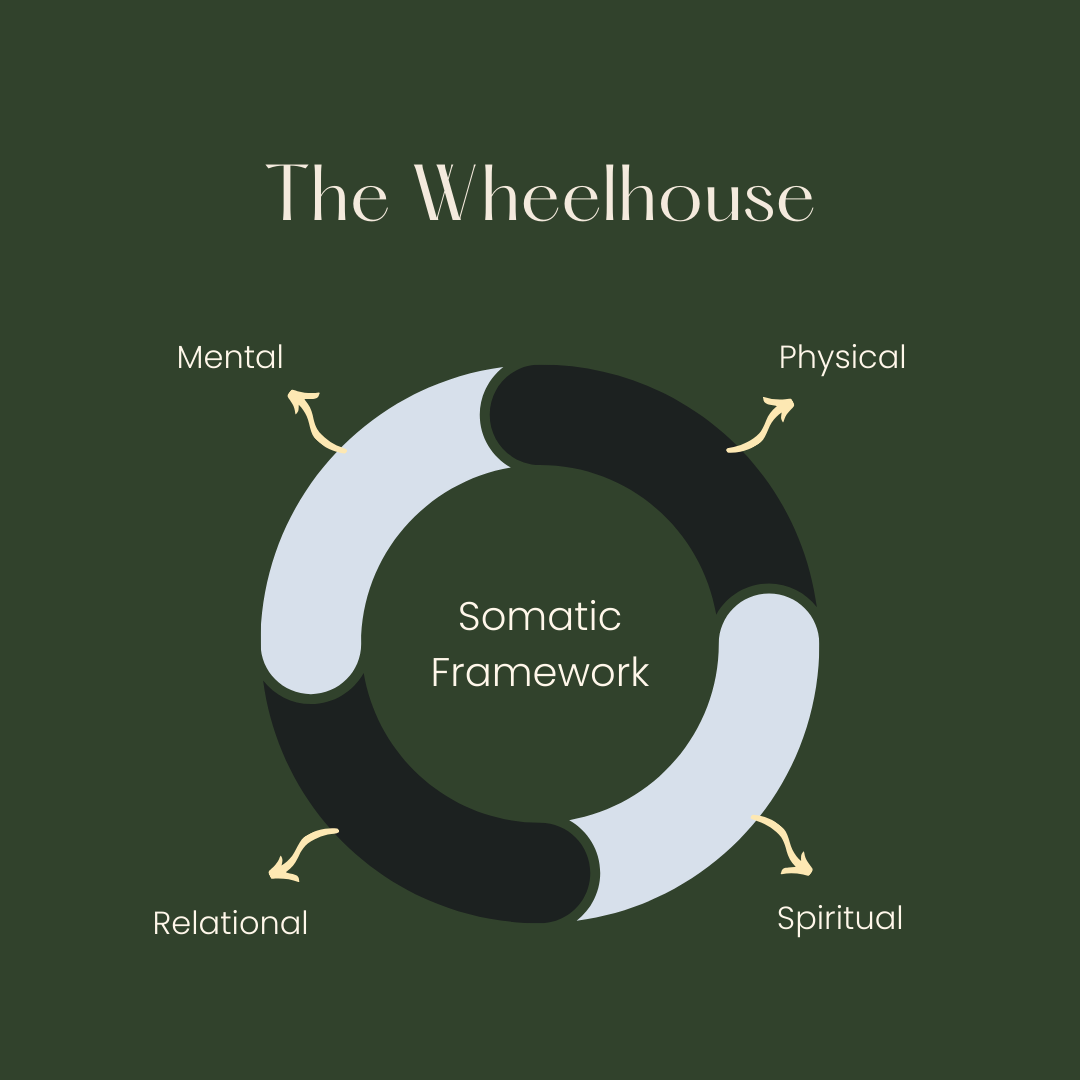
At Whole Life Healing, we understand that burnout is rarely just physical. It often shows up across your thoughts, your body, your relationships, and even your sense of purpose. That’s why we use The Wheelhouse, a somatic framework that offers a clearer, whole-person view of emotional exhaustion and healing. Rather than isolating symptoms, it shows how they’re connected, and how healing happens when we engage all parts of ourselves.
The Wheelhouse explores four interwoven dimensions of healing:
Mental – Restoring awareness and clarity
This includes your thought patterns, internal narratives, beliefs, and overall ability to regulate focus and self-reflection. Here, healing means creating space for clearer thinking, calming internal noise, and developing more compassionate and grounded mental patterns.
Physical – Releasing tension and reconnecting with the body
The body often speaks first. Tightened muscles, shallow breathing, headaches, fatigue, and digestive discomfort are common ways the nervous system signals dysregulation. Healing in this area involves learning to notice and respond to the body’s cues using somatic tools like breathwork, grounding, gentle movement, and body-based awareness.
Relational – Healing patterns of connection, communication, and trust
Stress can strain relationships, not because we don’t care, but because the nervous system shifts into protection mode. Healing in the relational space involves learning to communicate needs, build or rebuild trust, develop secure attachment patterns, and feel safe in both giving and receiving connection.
Spiritual – Reconnecting with meaning, hope, and belonging
This part of the Wheelhouse isn’t necessarily about religion; it’s about purpose and inner alignment. When we’re burned out, we often feel disconnected from hope, intuition, inspiration, or a sense of belonging. Healing here means rediscovering what feels deeply grounding, life-giving, and meaningful.
Burnout often stretches across all four parts of the Wheelhouse; it’s rarely contained to just one. True emotional rest means tending to each of these areas, giving the body, mind, and spirit a chance to reconnect, reset, and feel safe again.
3 Somatic Practices to Recenter and Reset During the Holidays
When your body is operating from stress or survival mode, it often needs simple, embodied experiences to help it recalibrate. These somatic practices are designed to gently interrupt stress patterns and guide the nervous system back toward safety, presence, and balance, supporting all four areas of The Wheelhouse.
1. Assess the Kind of Rest You’re Actually Missing
Not all rest restores us in the same way. It might not be a matter of more sleep, but instead needing emotional rest, mental quiet, spiritual renewal, or connection. Start by asking yourself: What kind of rest am I truly needing right now? Do I need stillness or movement? Quiet or shared connection? Is my body asking for relief, my mind for clarity, my relationships for presence, or my spirit for meaning?
Naming the type of rest you need helps you move from vague overwhelm to intentional restoration. It also helps you respond with care, not just exhaustion.
2. Step Outside, Literally
The body responds powerfully to fresh air, natural light, and even brief physical movement. Stepping outside, walking slowly, noticing your surroundings, or simply feeling the change in temperature helps signal to the nervous system that it is safe to soften. Environmental shifts, especially natural ones, offer gentle regulation by lowering arousal, releasing physical tension, and expanding emotional space.
Even two minutes of stepping outside can begin to reset a dysregulated system.
3. Touch the Present Moment (Grounding Through Sensation)
Grounding uses sensory input to bring the mind back from racing thoughts into the present moment. You might wrap your hands around a warm mug, feel an ice cube between your fingers, notice the texture of fabric, or hold a weighted object. These sensations help anchor your attention and regulate your system, especially when thoughts begin looping or emotions feel too intense.
Grounding is not about distracting from your experience, it's about reorienting to safety in this moment.
Why Emotional Rest Is Essential, Not Optional

When the nervous system is regulated, people can actually stop and enjoy the season; be present with loved ones, feel connected, and experience gratitude. True emotional rest brings clarity, warmth, and resilience, rather than reacting, we get to live in the moment and experience.
How Whole Life Healing Helps You Restore Nervous System Balance
You don’t have to navigate this alone. When you’ve been living in stress or survival mode for months, or even years, it can be hard to recognize the patterns, let alone know how to shift them. This is where support becomes essential. Therapy can help you understand what your body has been trying to tell you, and how to respond with care rather than exhaustion.
At Whole Life Healing, emotional rest, somatic awareness, and nervous system regulation are not just concepts we talk about, they are practices we cultivate. Using a trauma-informed and somatic approach grounded in The Wheelhouse framework, we help clients gently reconnect with their bodies, process stored stress, and move toward regulation and emotional balance.
Therapy isn’t only for moments of crisis. It’s also for building presence, resilience, and peace, so you can experience life, and even the holidays, from a place of grounded clarity rather than survival.
We support clients in San Antonio in restoring nervous system balance, strengthening emotional wellbeing, and approaching the season with a renewed sense of calm and connection.
The True Meaning of Christmas? A Regulated Nervous System
If this season feels heavy, it doesn’t mean you’re being a scrooge, it may simply mean your nervous system is asking for rest. When you understand how burnout shows up in your body, recognize your stress and anxiety patterns, and apply somatic tools to support regulation, you can begin to shift from survival mode into a more grounded, present state for yourself and your loved ones.
Emotional wellness during the holidays isn’t about doing more, feeling more cheerful, or forcing joy. It’s about feeling safe, present, and rested, within yourself.
If you’re seeking deeper guidance or support this season, we’re here to help. Reach out to learn how a tailored, somatic-based therapy approach can help you find balance, clarity, and emotional steadiness, both during the holidays and beyond.
The holiday season often amplifies:
Grief: longing for people or relationships that aren’t here
Divorce or separation realities: empty holidays or altered family traditions
Parental wounds: reminders of emotional unavailability or inconsistency
Domestic violence histories: heightened fear or hypervigilance
That’s precisely what makes this time of year so difficult. The contrast between what holidays “should” feel like and what they actually feel like. Feeling overwhelmed doesn’t mean something is wrong with you, it means you’re human.
3 Ways to Protect Your Peace
1. Before the Gathering
Identify triggers: know which people, topics, or environments challenge your nervous system.
Set intentions: decide how long to stay and what boundaries you need.
Build a support system: check in with a friend or therapist before/after.
Plan self-care: sleep, nourishment, movement, grounding rituals.
2. During the Gathering
Set boundaries clearly: “I’m not comfortable discussing that,” or “I’ll be leaving at ___.”
Take breaks: step outside, find a quiet room, or take a short walk.
Ground yourself: breathwork, sensory exercises, or feeling your feet on the floor.
Disengage from conflict: silence can be a boundary. You don’t have to justify or absorb everything.
3. After the Gathering
Prioritize self-care: rest, hydrate, nourish, and relax.
Reflect or debrief: journal or talk with a safe person about what came up.
Seek professional support if needed: trauma-informed therapy can help you regulate and process triggers.
Trauma Therapy in San Antonio: Find Peace and Healing This Season
At Whole Life Healing Therapies in San Antonio, we specialize in helping women heal from narcissistic family dynamics, spiritual trauma, and relational trauma, especially around emotionally intense seasons like the holidays.
We use trauma-informed modalities including:
EMDR Therapy in San Antonio
Integrative Somatic Therapy
Attachment-focused and relational healing
Nervous system regulation and parts work
These approaches help your nervous system respond differently, process unresolved emotional pain, and build real emotional safety, so you can show up with more clarity, grounding, and confidence.
You Deserve Safety, Space, and Support
The holidays may bring up old roles, wounds, and expectations, but you don’t have to abandon yourself in order to survive the season. Your healing matters, and you can meet this time of year with more peace and a deeper ability to discern, respond, and care for yourself.
We offer trauma-informed care for women healing from narcissistic, spiritual, and relational trauma. You don’t have to navigate this season alone, support is here. Reach out today to Whole Life Healing Therapies to begin your journey.